FABRIC OF OUR LIVES
Fabric of Our Lives was conceived as a companion project to Three Mothers — a play exploring women, forced migration and the textile industry. Recognising that theatre audiences represent just one community, we wanted to extend the conversation into the places most intimately connected with that story: the former British textile towns of Bolton, Manchester, Bradford, Sheffield and Wakefield, and the Migration Museum in London.
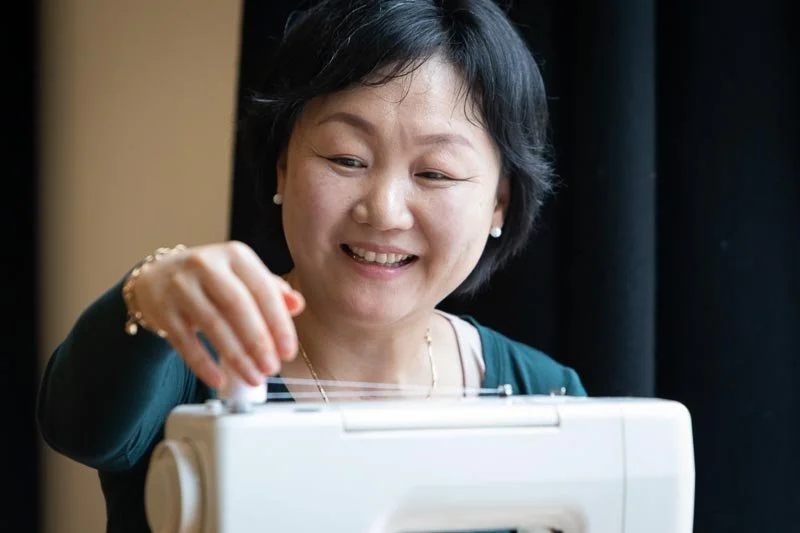
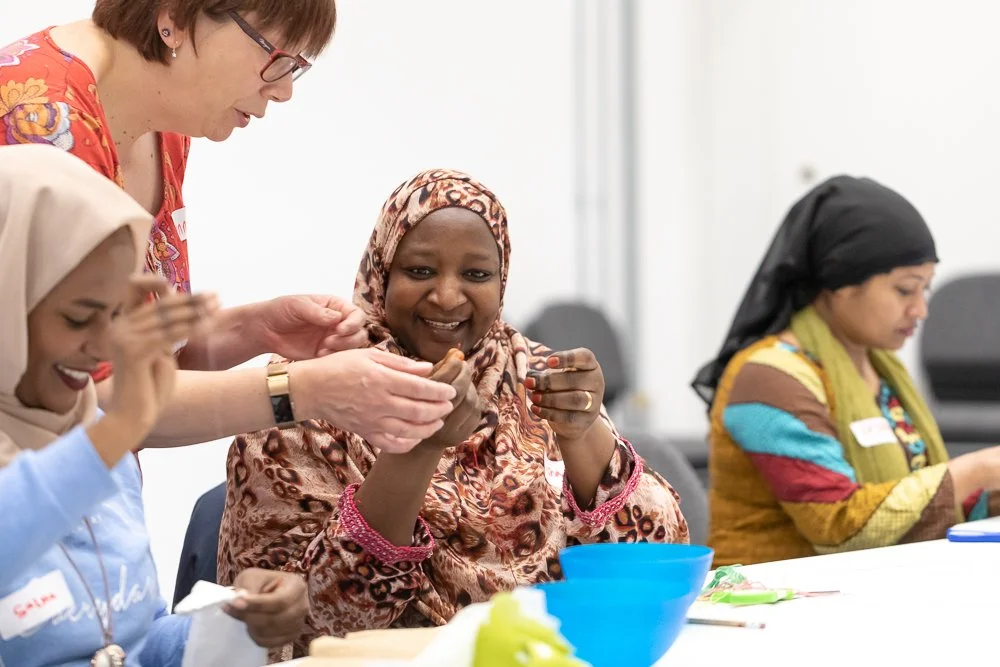
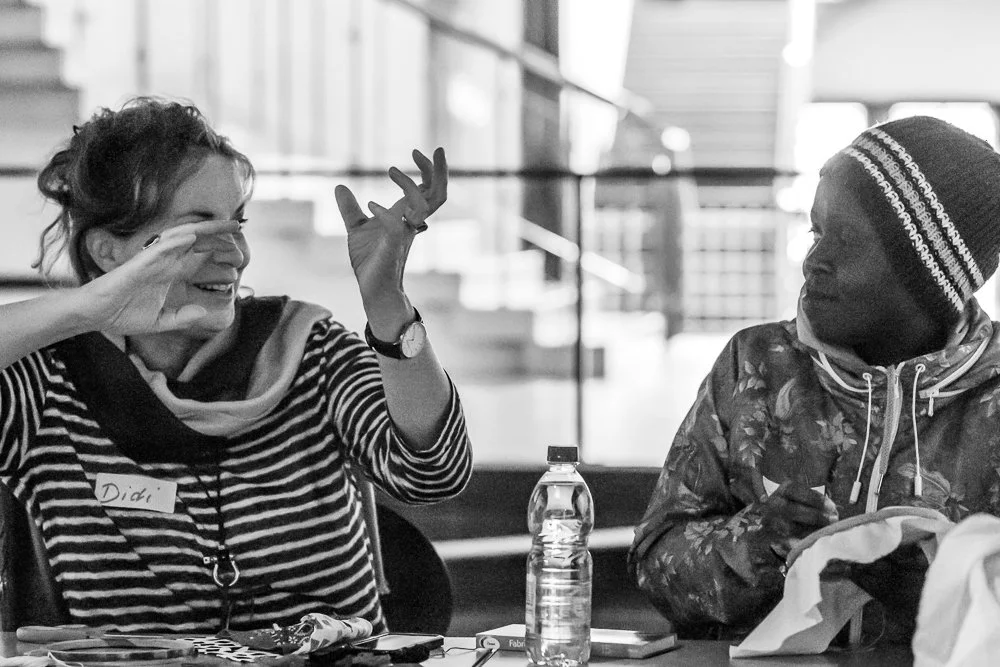
Our aim was to bring together women who had worked in or carried knowledge of the textile industry with recently arrived female refugees and asylum seekers — many of whom shared that same knowledge and connection to cloth and making. By creating a space for these women to sit, work and talk together, we hoped to forge new bonds across difference, build lasting relationships between organisations, and produce something tangible and beautiful that the participants had made together.
The Workshops
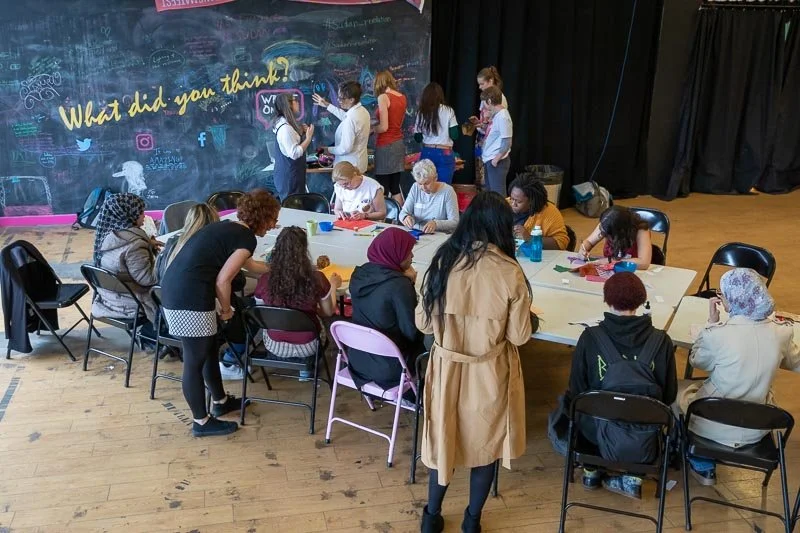
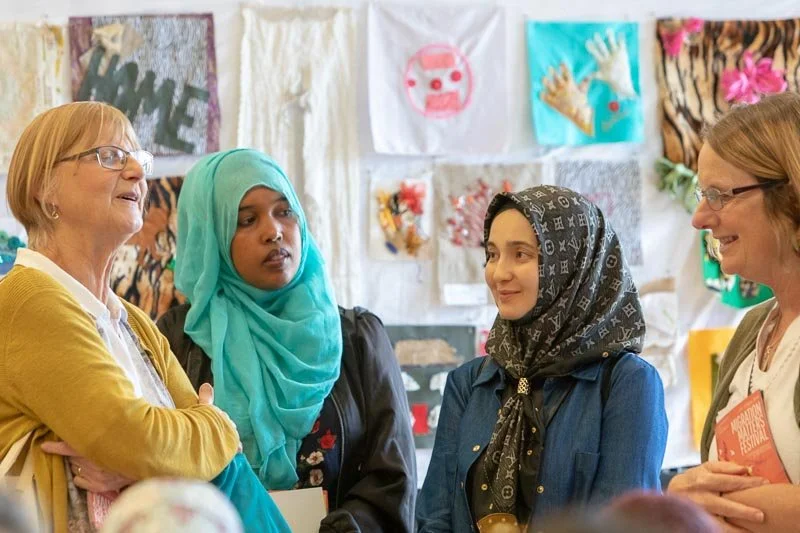
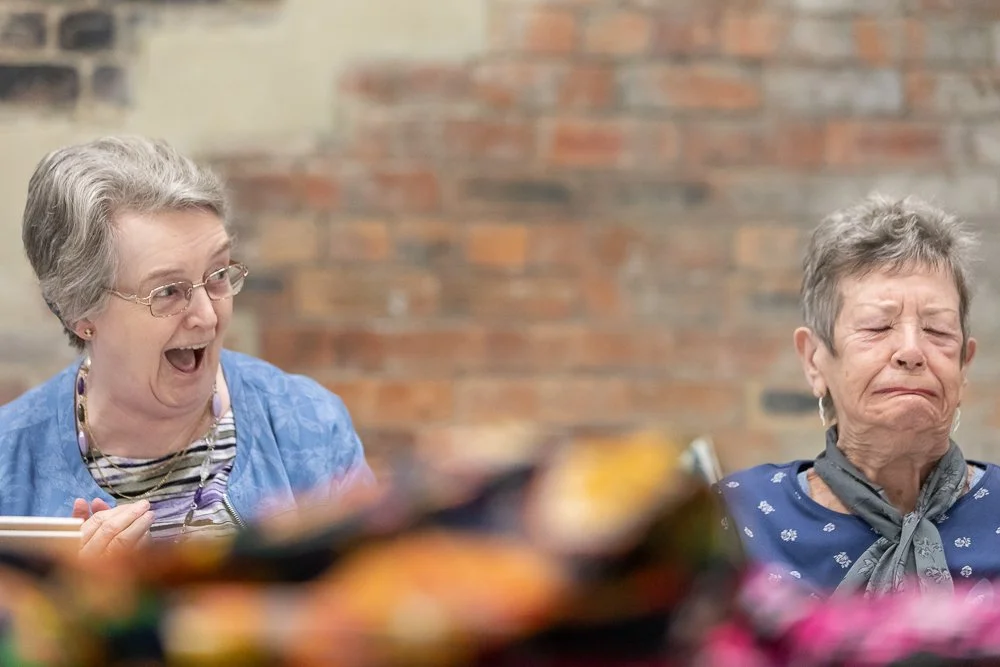
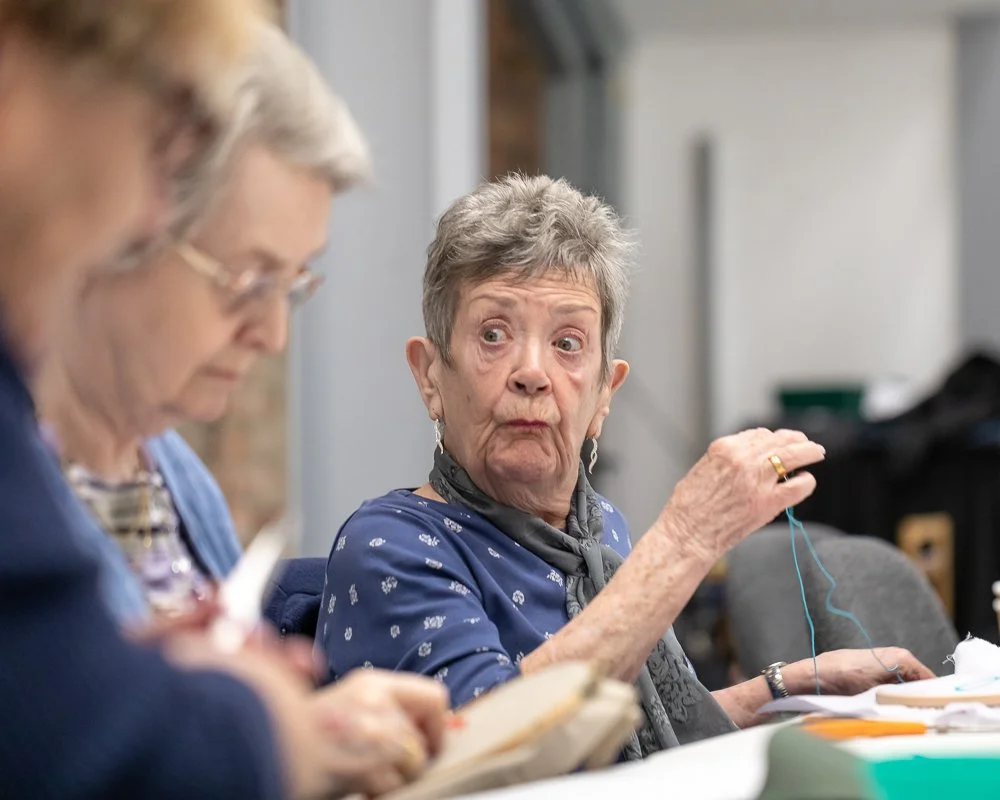
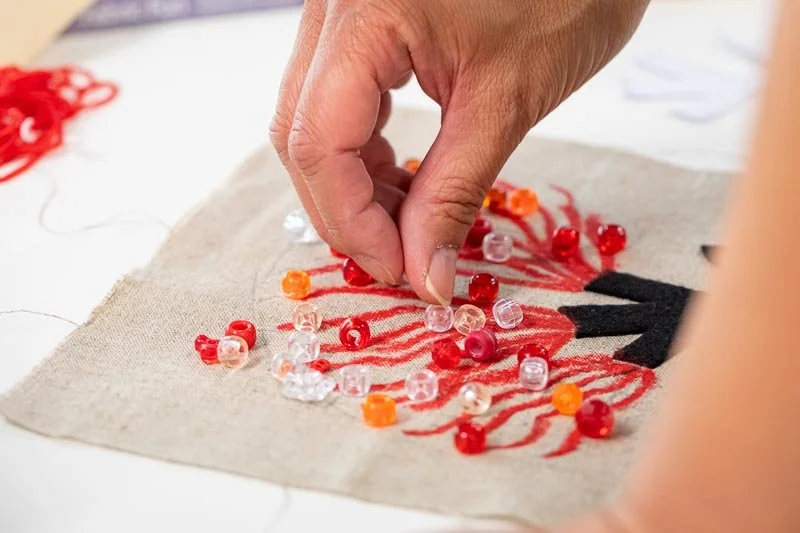
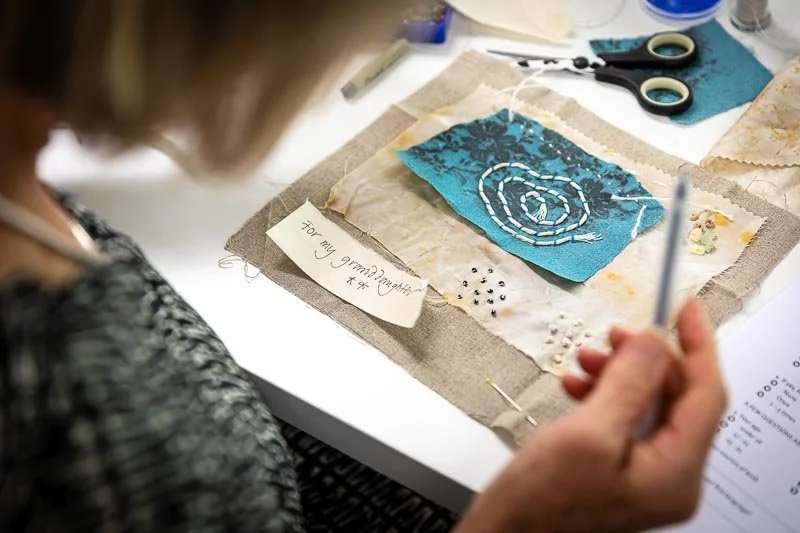
Eight textile workshops took place across six cities, each hosted by a partner venue and supported by organisations including City of Sanctuary, Migration Matters, Journeys Festival UK and the Migration Museum. Two professional art therapists from Art Refuge UK were engaged to support participants throughout, and photographer Sol Aizcorbe documented each session.
The project also travelled beyond the UK, taking a workshop to a women's refuge in Calais — bringing the same spirit of shared making and storytelling to women living in some of the most precarious of circumstances.
In total, 132 women participated, alongside volunteers and partner representatives. Participants came from Eritrea, Nigeria, Sudan, Namibia, Japan, Albania, Iran, Iraq, Ethiopia, Somalia, Bangladesh and Pakistan, as well as from the UK host towns themselves. At one workshop in Sheffield, 28 women arrived — far exceeding expectations — and with the help of volunteers, every one of them was welcomed and accommodated.
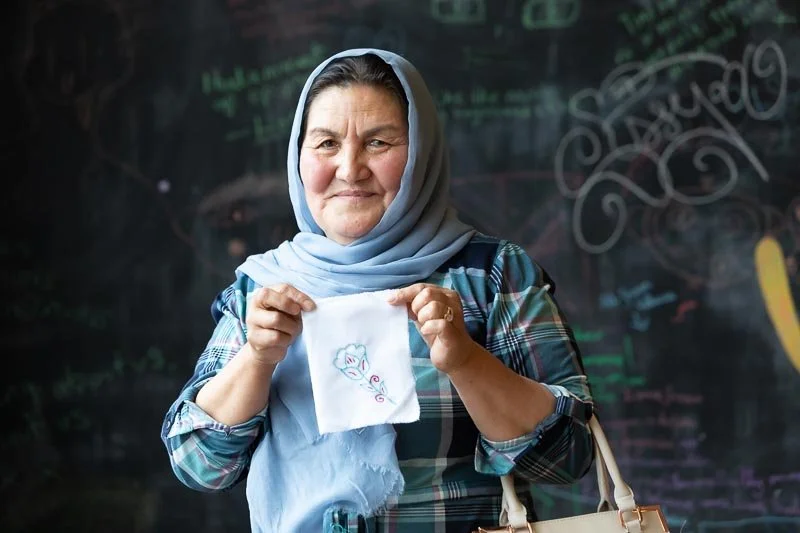
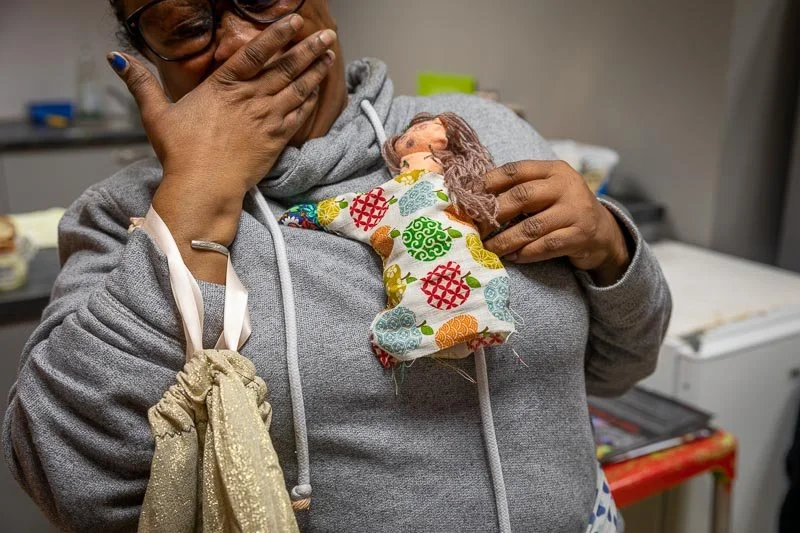
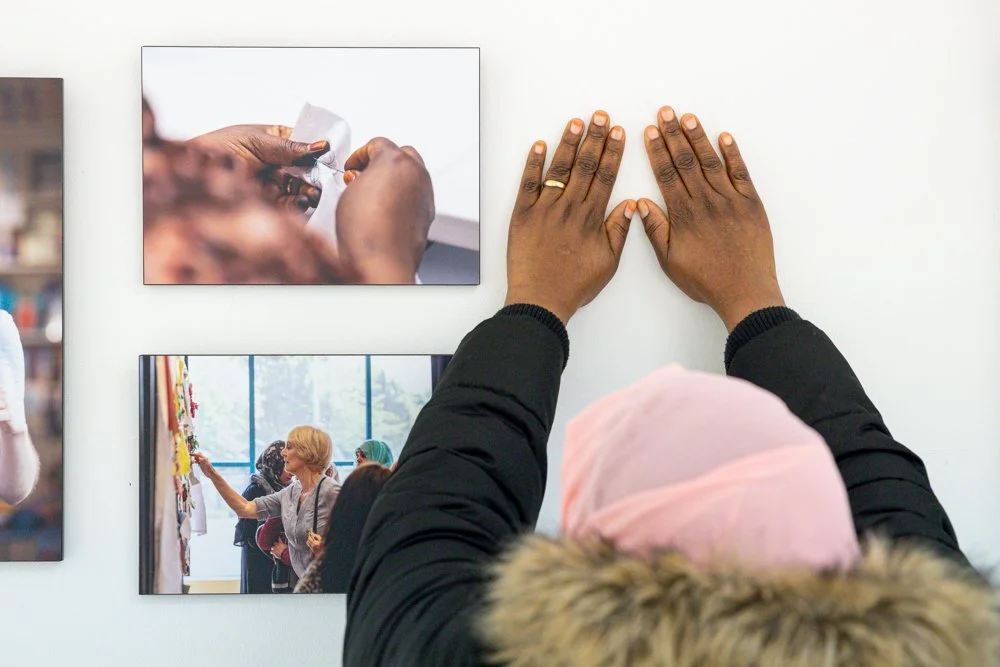
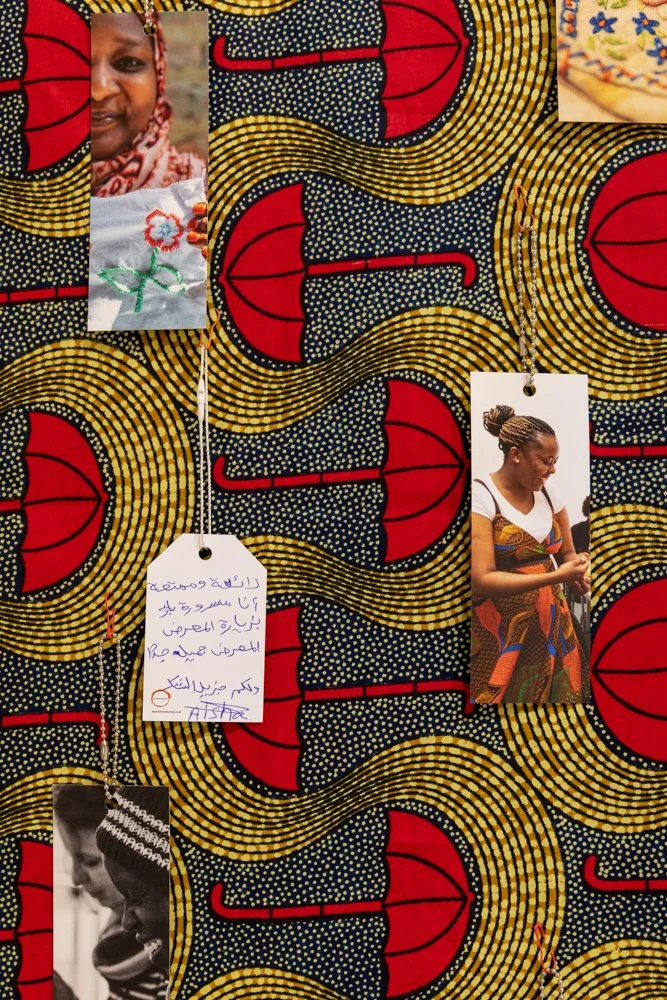
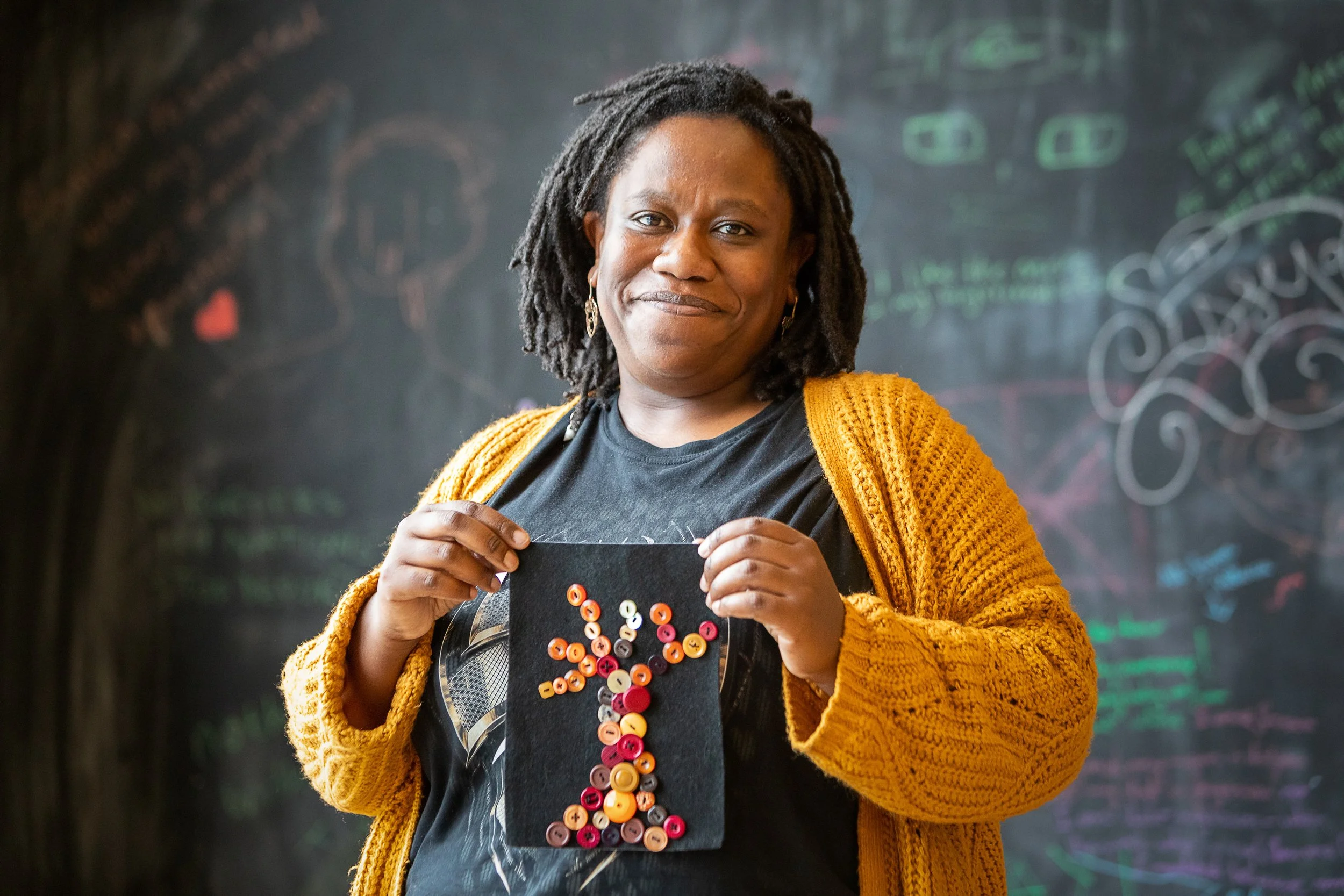
Throughout each workshop, stories, testimonies and conversation were recorded — capturing the connection and conviviality that filled the rooms. These recordings were later shaped into soundbites to accompany the exhibition. Portraits were taken of each participant alongside their textile contribution to the project, and stories and memories shared.
The Exhibition: A Tapestry of Our Lives
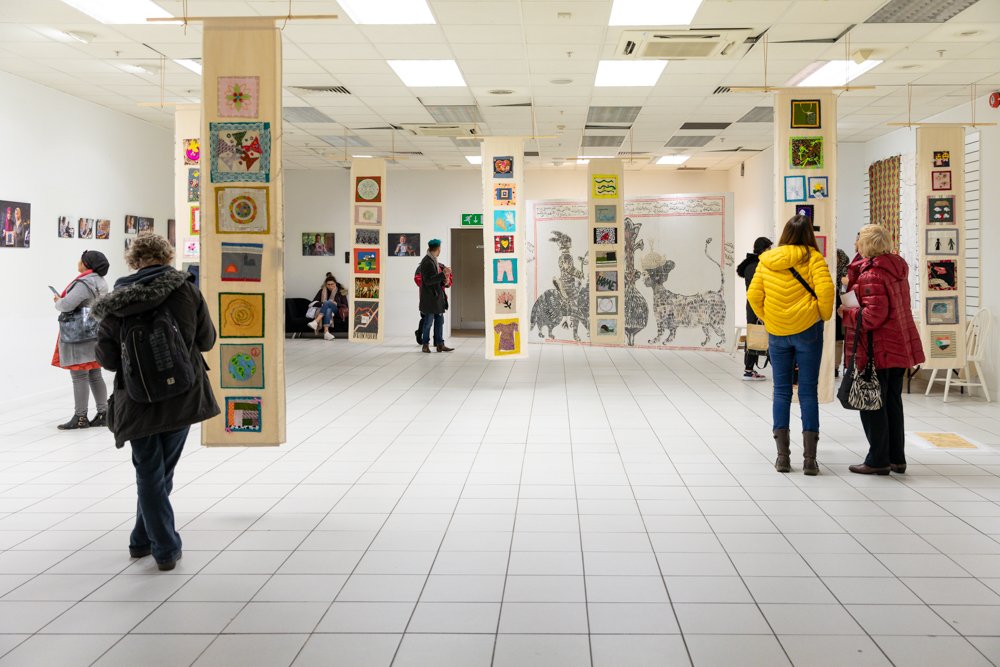
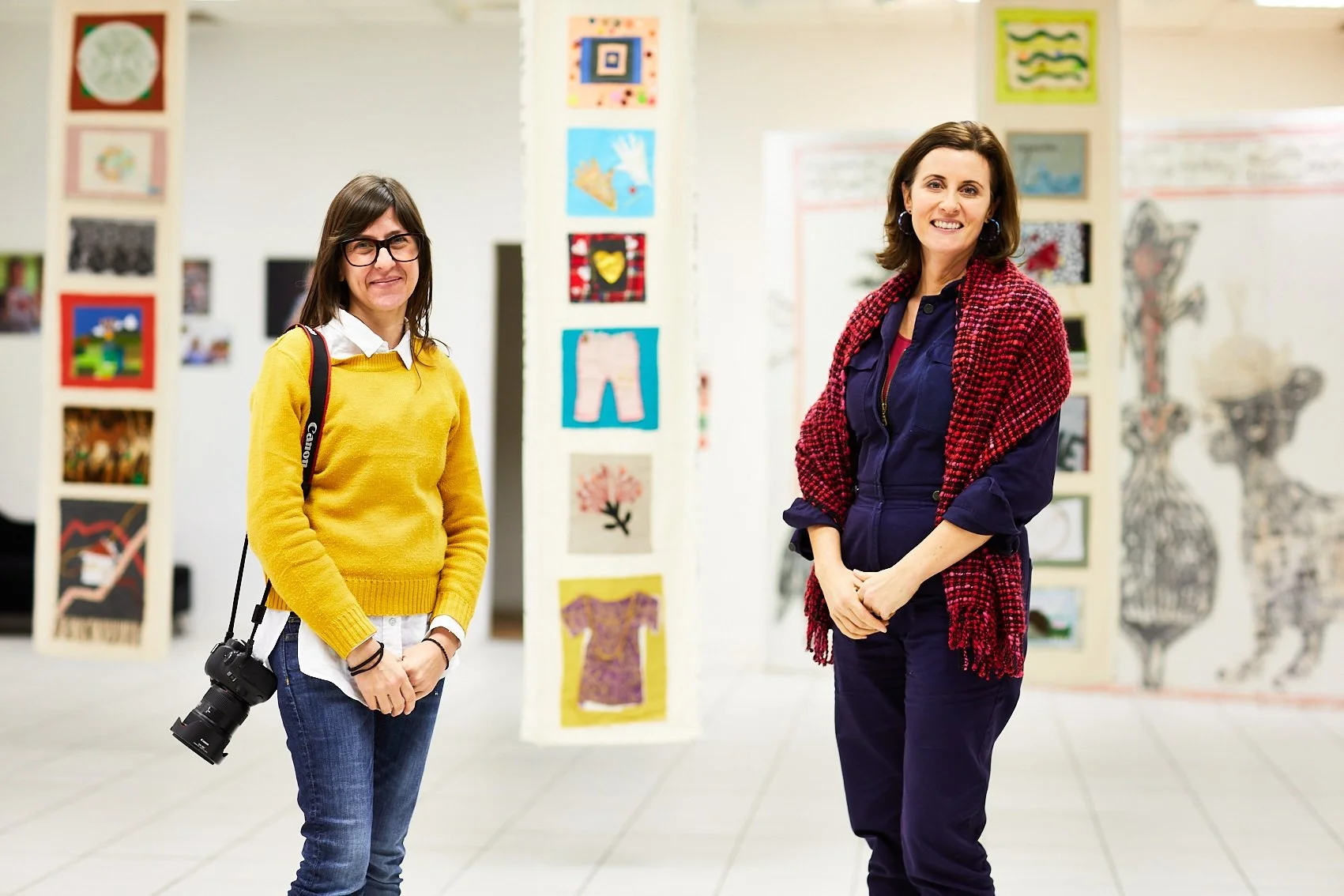
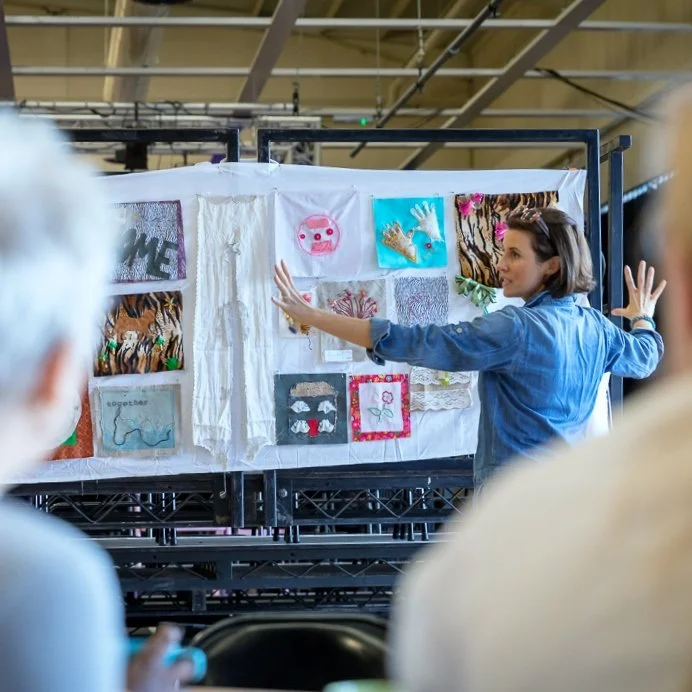
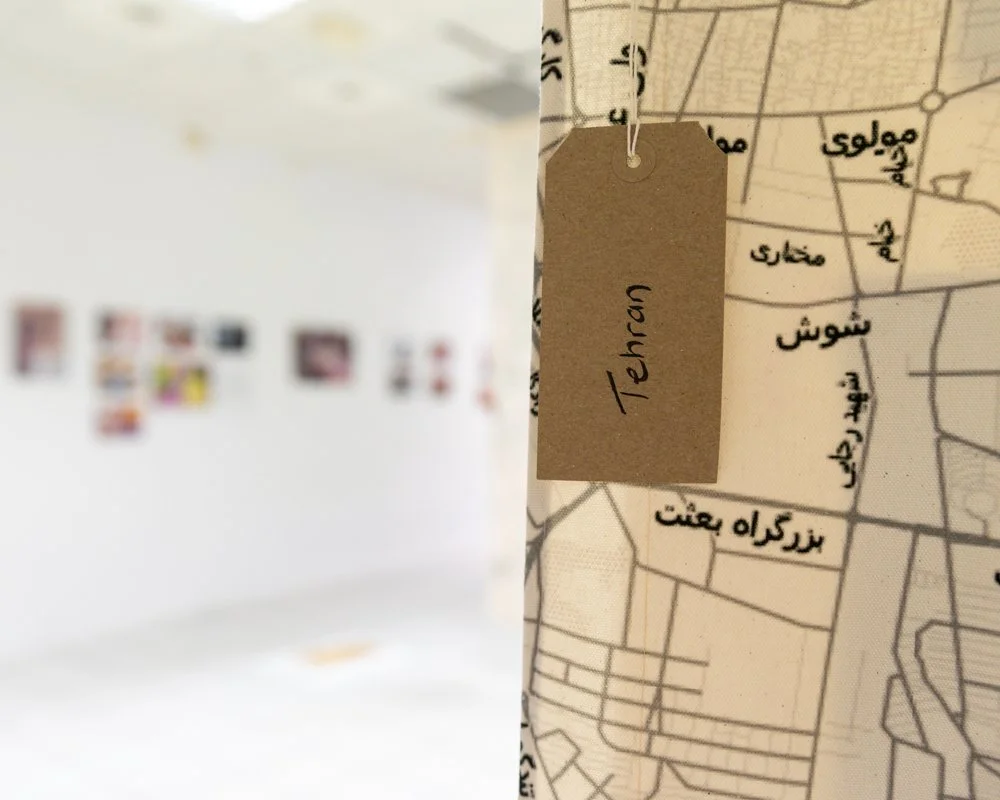
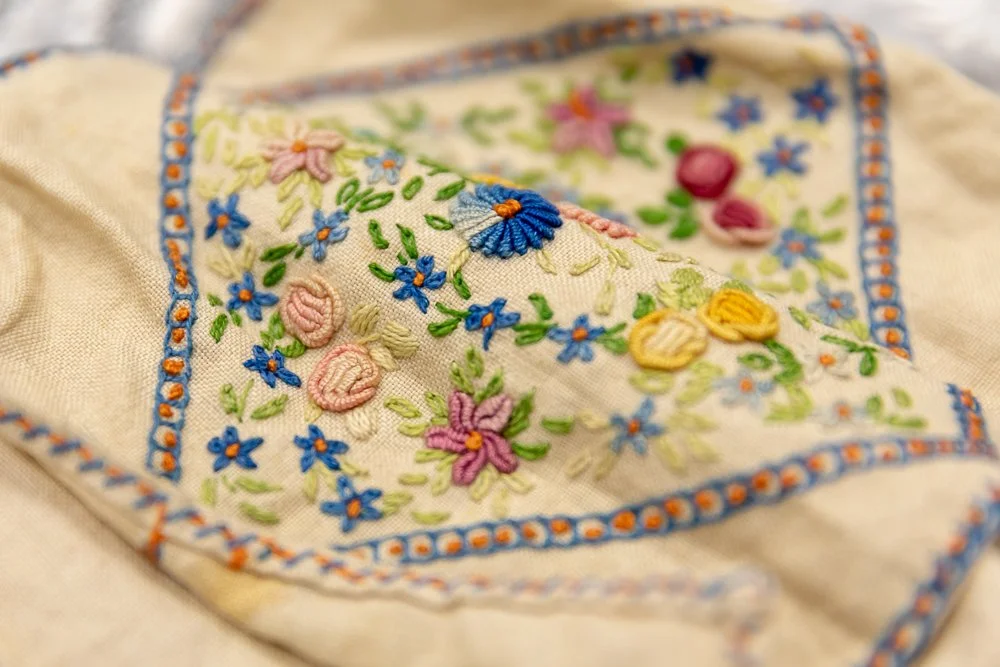
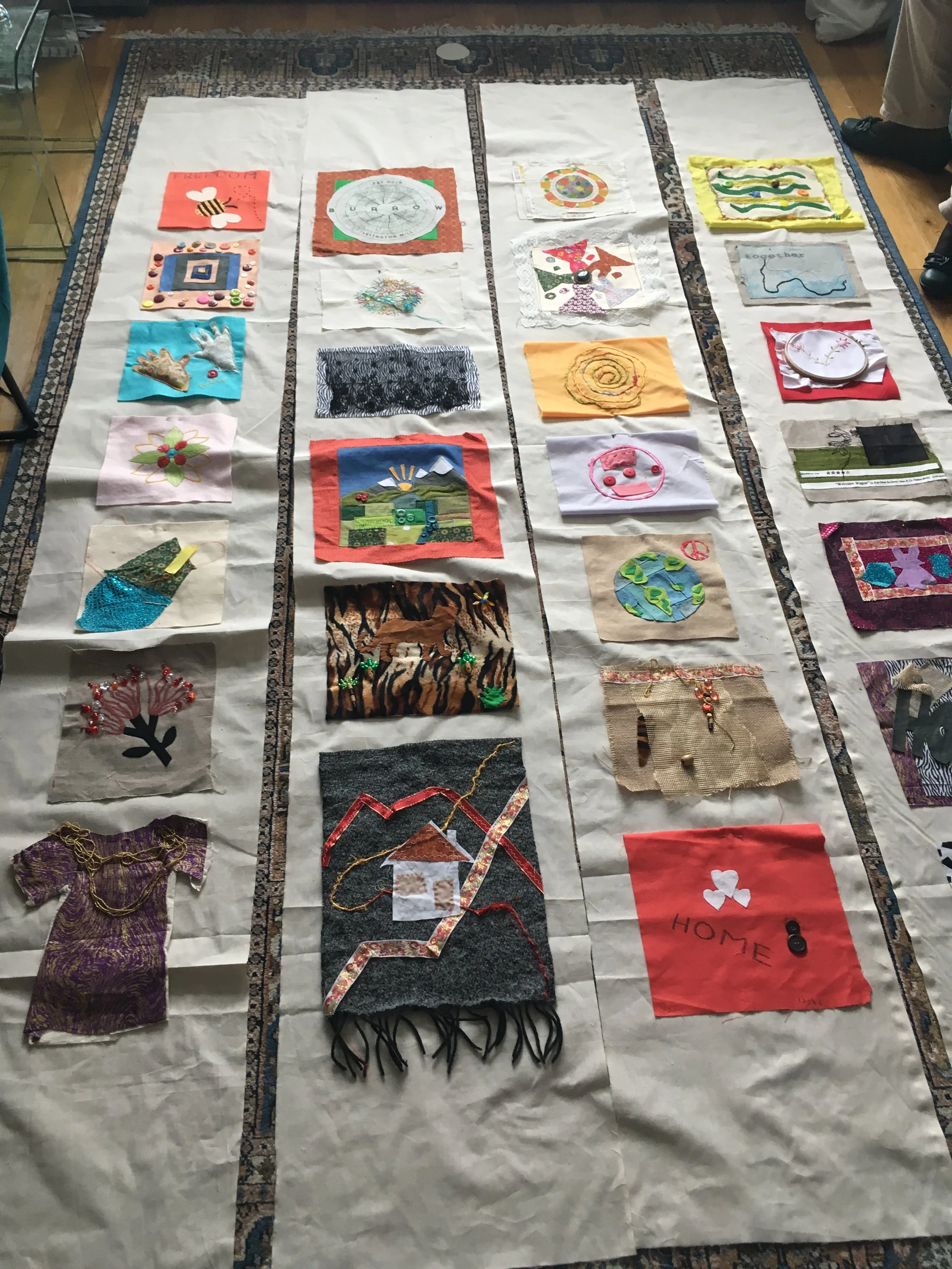
The centrepiece of the project was a collaborative textile exhibition, brought to life with the help of women's stitching and quilting groups and a team of dedicated volunteers. We had originally envisioned a single large patchwork, but instead created seven individual hanging tapestries — a decision that proved inspired, making the exhibition far easier to display across multiple venues.
The tapestries were made by hand, assembled over many sessions, and represent the collective creativity of every woman who took part. Photographer Sol Aizcorbe edited and prepared the portraits for exhibition, and sound artist Al Sirkett shaped the recorded conversations into an accompanying soundscape. Together, the tapestries, portraits and voices form an exhibition that is at once intimate and expansive — a record of shared making, shared stories and shared lives.
The exhibition was presented as part of Refugee Week and the Migration Matters Festival, and was hosted at a number of significant venues including the Whitworth Gallery, ArtWalk, the Migration Museum, the Octagon Theatre and Wakefield Theatre